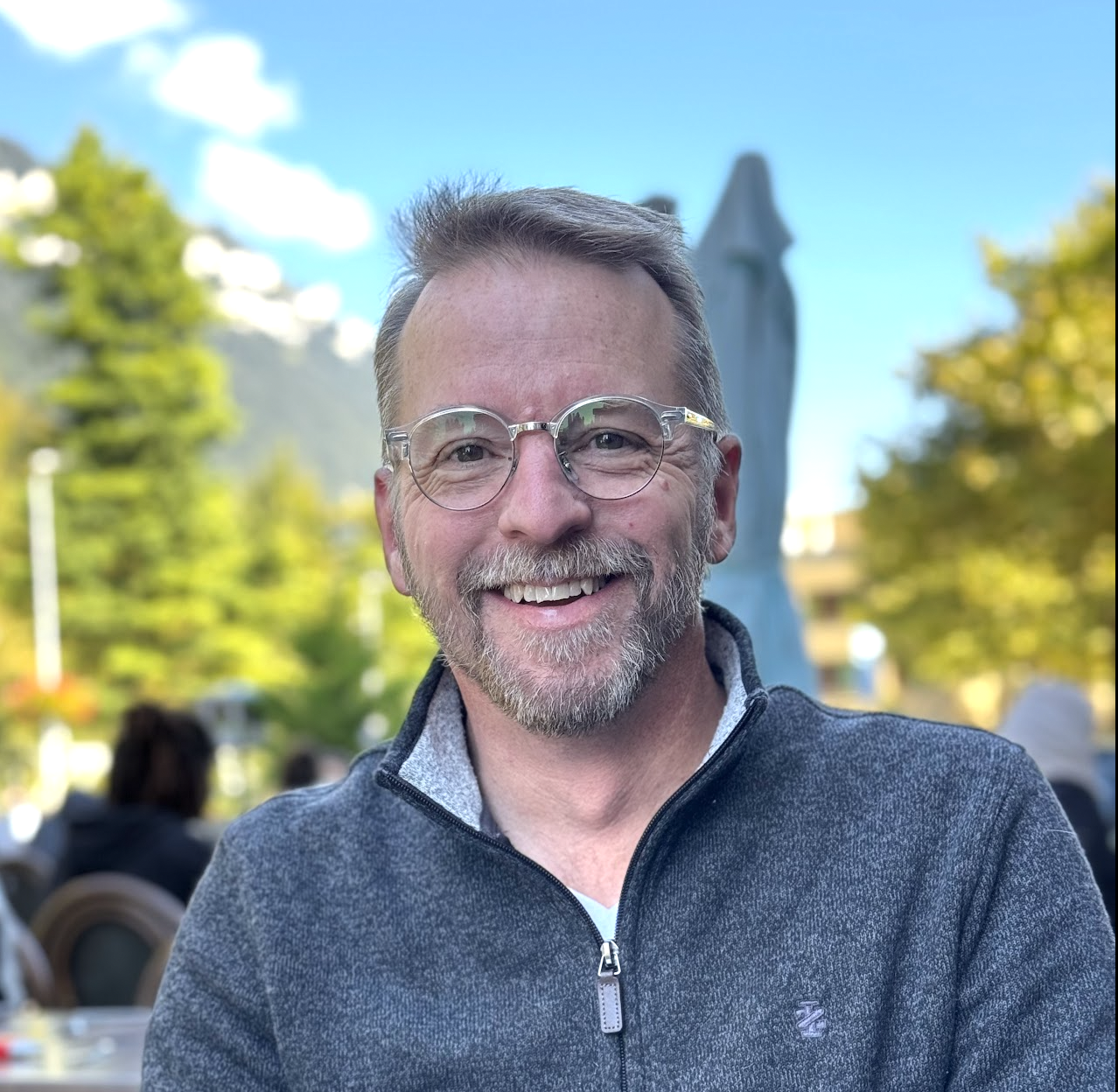
Peter Robichau is a technology executive and cybersecurity leader with over twenty-five years of experience spanning healthcare IT, enterprise security, regulatory compliance, and organizational transformation. He currently leads IT and Cybersecurity at an AI-driven healthcare software company developing Software as a Medical Device (SaMD) products.
Previously, Peter founded and led Category 3 Partners, a digital consultancy providing strategic consulting to organizations navigating cybersecurity challenges, compliance mandates, and technology transformation. His career includes leadership and consultative roles with many organizations, including academic medical systems where he directed information security programs, led security for enterprise-wide Epic EHR implementations, and managed complex infrastructure modernization initiatives.
Peter is first a family man — a devoted husband and a loving father to four wonderful (adult) children. He makes his home in a lovely hamlet in the southern Appalachian mountains where the foothills rise to meet the majestic Blue Ridge.
His career has been defined by a deep commitment to building resilient technology programs, and translating complex regulatory requirements, including HIPAA and HITECH, into organizational programs characterized by digital modernization.
Peter’s approach to leadership emphasizes organizational alignment, executive partnership, and measurable risk reduction, bridging the gap between technical operations and boardroom strategy.
Peter’s book, Healthcare Information Privacy and Security: Regulatory Compliance and Data Security in the Age of Electronic Health Records (Apress/Springer, 2014), remains in use as a university textbook in health law and clinical informatics programs. In 2023, he was inducted into EC-Council’s CISO Hall of Fame, recognizing him among the top 50 Certified Chief Information Security Officers globally. Read more about his publications and credentials.
He holds CISSP, C|CISO, PMP, Epic Security, PROSCI Change Management, and Professional Scrum Master certifications.
Peter writes at the intersection of technology, philosophy, and theology. He resides in the southern Appalachian foothills of South Carolina, and is available for speaking engagements and professional inquiries.
How Peter Is Wired
Every leadership assessment Peter has taken tells the same story: he’s built to move fast toward things that don’t exist yet. His instinctive response to uncertainty isn’t to slow down and study; it’s to improvise, experiment, and create something new. He synthesizes just enough to act, then iterates. That’s a feature, not a bug.
Peter is drawn to vivid pictures of what’s coming, finds connections between ideas that don’t obviously belong together, and has a drive to elevate good work into something exceptional. That last instinct acts as his built-in quality control; it keeps his speed from producing volume at the expense of caliber.
What makes this a compelling professional “feature” is what his colleagues consistently report: Peter reads institutional dynamics and power structures with unusual precision, maintains composure during high-velocity transitions, and leads with genuine empathy. He pushes hard, but people don’t feel steamrolled. Peer assessments show exceptional marks in self-management, adaptability, teamwork, and mentorship, and his natural optimism tempers the impatience that comes with wanting everything to move faster.
The through-line across all of it: Peter operates as a disruptive catalyst. He sees the future state before others do, invents paths to get there under uncertainty, and brings people along through energy and conviction rather than positional authority. His mind is a laboratory of disparate connections, and he’s at his best when he is originating options that linear thinkers would neither consider nor reach.